





- Automotive Intelligent Chassis System Testing Solutions
1.1 Industry Background & Engineering Challenges
As the automotive industry evolves toward electrification, intelligence, and steer-by-wire, chassis systems such as steering, braking, and suspension are transforming from “mechanical actuation components” into highly integrated software‑, electronic‑, and actuator‑based systems.
Traditional testing methods are no longer sufficient to meet the following critical demands:
– Dynamic consistency validation under multi‑system cooperative operating conditions;
– Safety and redundancy validation for steer‑by‑wire systems under extreme conditions;
– Repeatable and quantifiable testing from component level to system level;
– Rapid verification and regression testing capabilities that align with vehicle development cycles;
– Fast response to testing challenges brought by intelligent chassis upgrades.
For OEMs and Tier‑1 suppliers, the core issue is no longer “whether it can be tested”, but rather:
Can we conduct effective validation – realistically, controllably, and reproducibly – early in the development phase?”
- KTS Systematic Approach
KTS takes a system‑engineering perspective on the complete vehicle chassis and has built a comprehensive intelligent chassis testing solution system that covers:
Component Level → Subsystem Level → System Level → Hardware‑in‑the‑Loop (HIL) Simulation.
This system is not a single piece of equipment, but consists of three layers of capability:
- High‑precision actuation and loading capability;
- Multi‑channel synchronous measurement and control capability;
- Test condition modeling and data‑closed‑loop capability.
This ensures that test results are not only “measurable”, but more credible, benchmarkable, and usable for design decision‑making.
- Core Testing Capability Modules
3.1 Electric / Electro‑hydraulic Recirculating Ball System Testing Module
– System power‑assist characteristics and response testing;
– Returnability performance and hysteresis characteristics evaluation;
– Active steering, intelligent steering redundancy, and failure‑mode validation;
– Synchronized loading and measurement of multiple variables, including torque, angle, force, working current, and working oil pressure.
Applicable to:
– Hydraulic recirculating ball assemblies and components;
– Electric recirculating ball assemblies and components (X‑EPS);
– Steer‑by‑wire systems;
– Rear‑wheel steering systems;
– Corner module chassis systems.
3.2 Brake System Testing (Brake / BBW)
– Braking force output and response characteristics testing;
– Brake pedal feel and feedback characteristic simulation;
– Brake system dynamic consistency and durability testing;
– Brake‑by‑wire safety strategy validation.
Applicable to:
– EHB / i‑Booster assemblies, EMB assemblies;
– Conventional braking systems;
– Electronically controlled braking systems;
– Brake‑by‑wire systems.
3.3 Suspension & Vertical Dynamics Testing
– Suspension force‑displacement characteristic testing;
– Dynamic stiffness and damping characteristics evaluation;
– Multi‑condition vertical loading and coupled analysis.
3.4 System‑Level & HIL Co‑Testing
– Closed‑loop testing of chassis controllers with actuators;
– Semi‑physical simulation and co‑debugging with vehicle control strategies;
– Virtual validation of extreme and fault conditions.
By combining HIL with physical actuation systems, “road test risks” are shifted forward into the laboratory environment.
- Key Technical Advantages
– High‑dynamic, high‑precision actuation systems
– Servo loading systems with high‑bandwidth response capability;
– Support for force / displacement / torque multi‑mode control;
– Meet the testing requirements for high‑frequency dynamic and impact conditions.
– Multi‑channel synchronous control and measurement
– Strict synchronization across multiple axes and channels;
– Support for complex coupled operating conditions;
– Ensure authenticity and consistency in system‑level testing.
– Condition modelable and reproducible
– Support for typical road conditions, operating conditions, and custom condition modeling;
– Testing processes are repeatable, replayable, and comparable;
– Suitable for design validation and regression testing.
– Customizable system integration capability
– Tailored to the customer’s chassis architecture and development phase;
– Applicable to bench testing, production line testing, and R&D testing;
– Can be integrated with the customer’s existing software and control platforms.
- Typical Application Scenarios
– OEM chassis system R&D and validation
*Representative customers include:* BYD, GAC R&D Center, BAIC New Energy, JAC, Geely, Chery, Dongfeng R&D Institute, Great Wall Honeycomb, Chang’an Chenzhi Technology, FAW Hongqi, NIO, XPeng, etc.
– Tier‑1 steering / brake system development
*Representative customers include:* FAW Guangyang, Nanyang Neismot, Bosch, Huawei, Zhejiang Shibao, Yubei Steering Systems, Honeycomb Steering Systems, BYD Fudi Power, Chenzhi Technology.
– New steer‑by‑wire chassis architecture validation
FAW Hongqi, NIO, XPeng.
– Early‑stage testing for new vehicle platform development.
– Rapid regression testing after design changes.
- Implementation & Delivery Model
KTS provides a complete engineering service from requirement analysis to system delivery:
- Testing requirements and operating condition analysis;
- System scheme design and simulation validation;
- Equipment manufacturing and system integration;
- On‑site installation, commissioning, and training;
- Long‑term technical support and system upgrades.
- Selected Case Studies
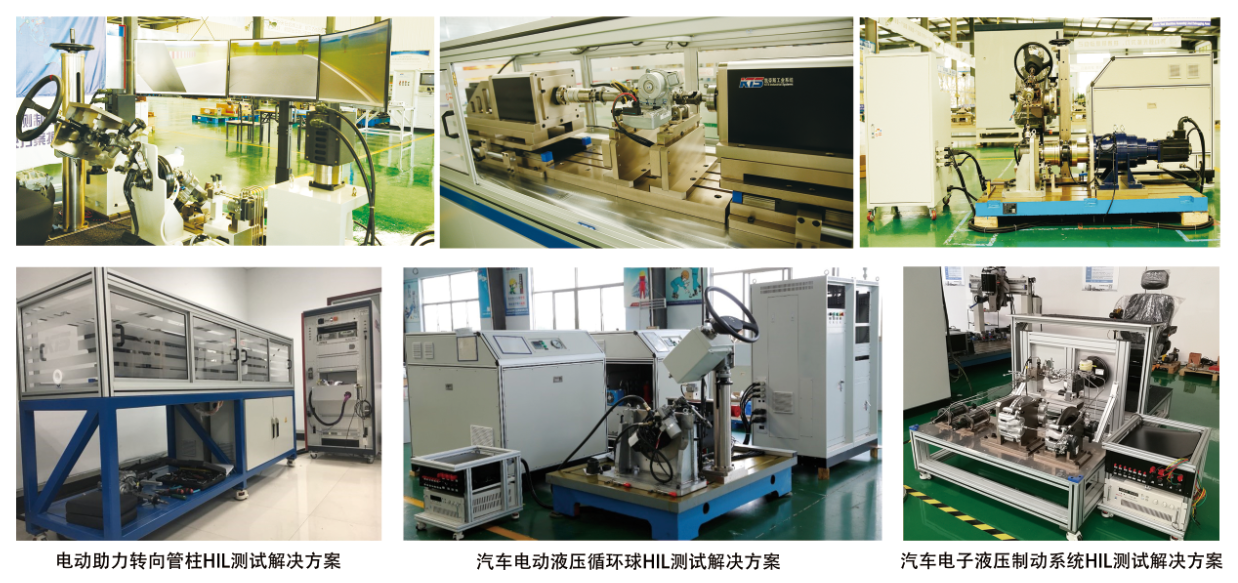
7.1 Automotive Steering System Testing Solutions
As product development and testing responsibilities gradually shift down the supply chain, customers increasingly expect to conduct independent R&D and validate sample performance and durability. To provide the component testing and validation means required by customers, KTS adopts the concept of standardized non‑standard equipment, offering mature standard modules and solutions.
KTS solutions can implement predefined test methods, while also allowing customers to design and build their own systems. The standard modular design can be configured according to customer needs. The standard KEYEN test platform enables system control while acquiring test data in real time and displaying it on the interface, with flexible combination of curve relationships.
Solution and Design Fields:
– Steer‑by‑wire system performance testing solutions;
– Steer‑by‑wire system durability testing solutions;
– Rear‑wheel steering system testing solutions;
– Steering gear static torsion testing solutions;
– Steering gear impact testing solutions;
– Environmental durability testing solutions;
– KTS‑MT intelligent motor testing and analysis system;
– KTS‑STM100 servo torsion special machine.
7.2 Automotive Brake System Testing Solutions
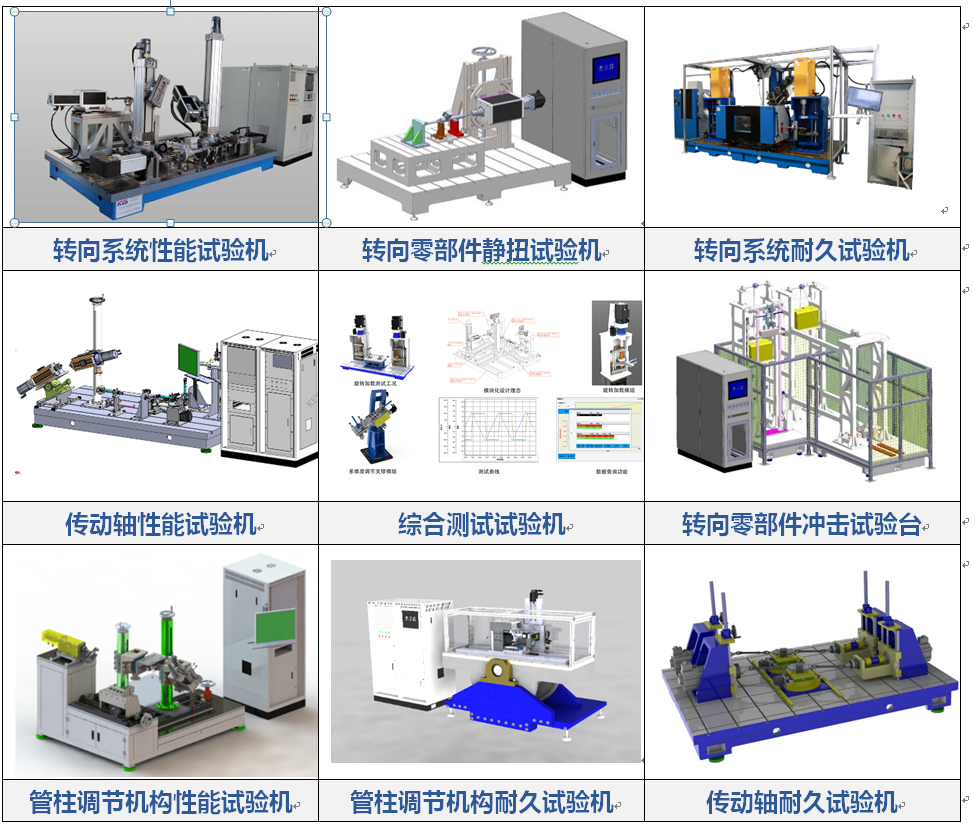
With the proliferation of electric vehicles and the application of autonomous driving, vacuum boosters are gradually exiting the market. Electronic hydraulic braking systems (EHB) have become standard equipment in automobiles, while electronic mechanical braking systems (EMB) are also being actively developed. To address the performance and durability testing of EHB, KTS has participated in drafting multiple industry standards and has developed a series of standardized test solutions.
7.3 Automotive Suspension System Testing Solutions
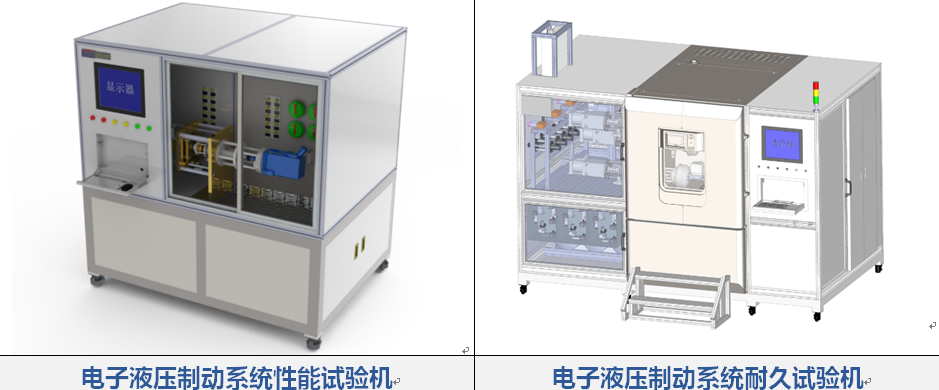
With the rapid development of vehicle intelligence and electrification, air suspension, electromagnetic active suspension, and AI‑adaptive systems are becoming core industry trends. Suspension systems are shifting from “passive response” to “intelligent prediction”. KTS offers full‑scenario testing solutions tailored to the characteristics of next‑generation suspension technologies, helping the industry accurately validate product performance.
Solution Highlights:
– Multi‑mode dynamic testing: Integrates high‑precision vibration tables and closed‑loop data control technology to simulate various complex scenarios, enabling millisecond‑level dynamic calibration of suspension stiffness/damping parameters.
– Intelligent compatibility design: Supports signal parsing and durability testing for new architectures such as air springs, CDC solenoid valves, and active‑by‑wire suspension.
– Real‑vehicle load simulation: Achieves suspension load application via fixed weights or electric cylinders to simulate real‑vehicle conditions.
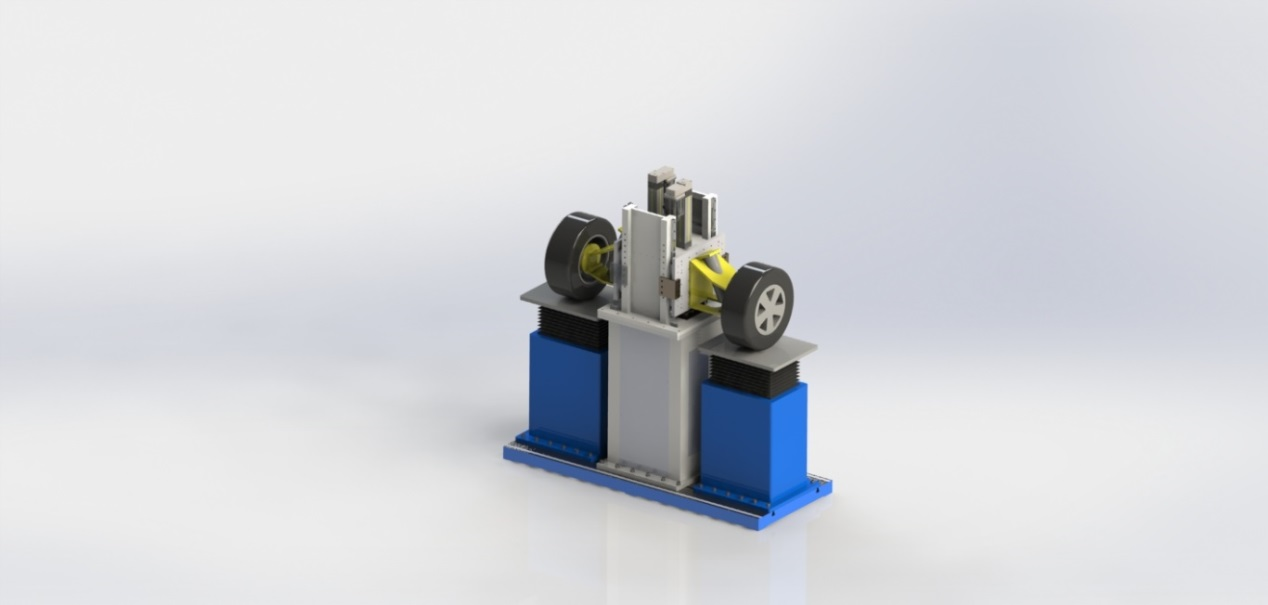
This solution has been successfully applied in multiple OEM and Tier‑1 steering, braking, and steer‑by‑wire chassis system development projects, significantly improving test efficiency and validation depth in areas such as system dynamic consistency and safety verification.
7.4 System‑Level & HIL Co‑Testing
To properly validate the System Under Test (SUT), the Hardware‑in‑the‑Loop simulator used for testing must achieve higher accuracy, precision, and bandwidth, as well as lower latency, in order to faithfully reproduce real‑world scenarios for the SUT.
With the rapid development of intelligent chassis technology, automotive steering systems are also moving toward “electrified, steer‑by‑wire, intelligent, and lightweight”. For autonomous driving testing at the laboratory stage, HIL simulation has become even more challenging. It requires more complex mathematical models, faster real‑time control, and loading simulation that more closely resembles actual vehicle states, in order to perfectly reproduce validation conditions.
Current HIL simulation testing needs to address the following issues:
– Multi‑channel signal synchronization: Not only simulating sensors but also synchronizing with other digital signals;
– Accurate analog response: Analog I/O must be able to accept and reproduce more complex signals;
– Model complexity: Incorporating higher‑order effects into models;
– Reducing analog latency: Significant latency is unacceptable in HIL testing.
The path to an all‑electric automotive future: providing testing and measurement solutions for electric vehicles.